12/2025
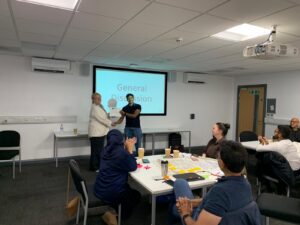
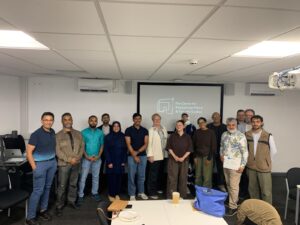
In mid-December 2025, my fellow campus ISB peers and I attended the final Future Workshop. This was my first time participating in these sessions, and I found them both very thought-provoking and valuable. It reshaped and expanded the way I approach thinking about the future.
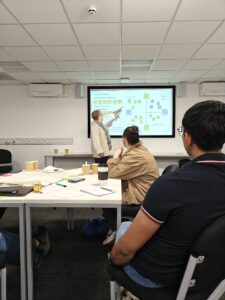
The workshops were delivered by academic scholar Dr Jordi Serra del Pino and encouraged us to think more deeply about the future, particularly in terms of planning for and forecasting the unpredictable. I noticed many strong connections in how future studies are applied across business strategy, politics, and healthcare. It showed how this field is relevant to a wide range of sectors and industries.
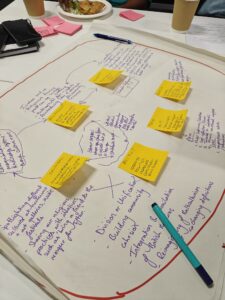
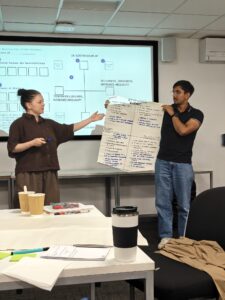
These workshops provided us with the theories and frameworks needed to engage critically with future thinking. Several groups focused on different topics, including security surveillance, ethno-nationalism, and mosque ethics and standards.Each group activity involved developing questions, strategies, and tools to explore the different elements of planning for uncertainty. We were encouraged to prepare for multiple possible futures rather than assuming a single outcome.
On day one, we looked at how to identify potential scenarios using four components: trends (based on empirical and numerical data), events (single occurrences without an established track record), future images (the dominant ideas and visualisations shaping how people imagine possible futures), and the actors or agents involved in each phenomenon.
On day two, we explored the theory of post-normal assessments, focusing on three areas: the extended present, familiar futures, and unthought futures. We also learned about post-normal “menageries,” which explain why certain surprises catch us off guard, such as the concepts of the black swans, black elephants, and black jellyfish. Another key concept we explored was the “unthought.” We applied these ideas through case studies such as Brexit and the COVID-19 pandemic, which helped bring the theories to life and strengthened our group work.
Overall, the workshop equipped me with valuable tools to think more seriously about what the future might look like for British Muslims and other important social issues. It also reinforced why it is so important for us to be actively involved in shaping decisions, participating in these conversations, and working to create meaningful change and impact.
~
Ruqayyah
08/2026
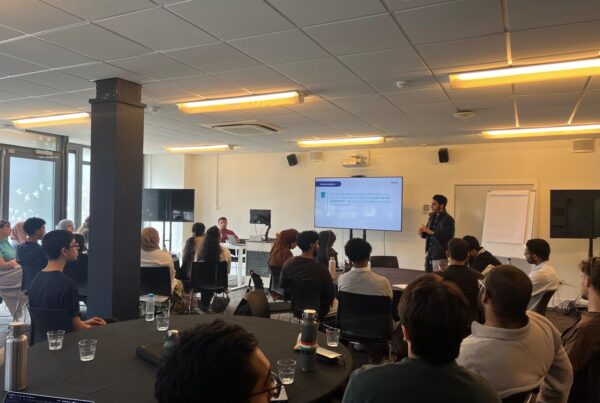
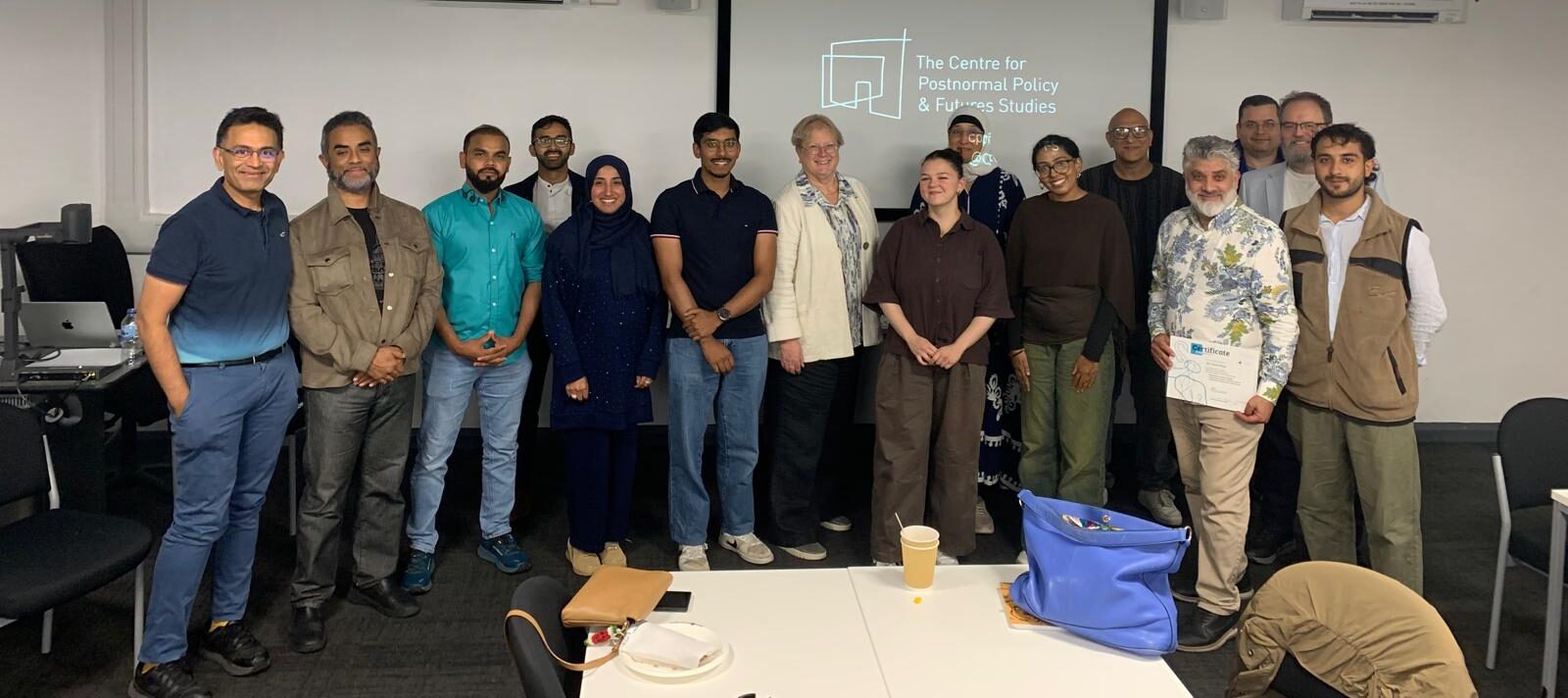
On Sunday 23rd August, myself and a number of ISB members attended the fourth and final session of the Muslim Institute’s British Muslim Futures Network programme in Manchester. This was the conclusion of a series of workshops which sought to empower British Muslims with future planning skills to allow for a more effective and proactive approach to dealing with challenges and scenarios of the future which can feasibly arise.
In this workshop, we looked at 4 different scenarios for the future and in different groups we considered how different political parties might behave and approach these scenarios. The scenarios considered whether technology would be used to unite or divide communities, and whether the UK government would be well-resourced or lacking in resources, with each of the 4 scenarios corresponding to one combination of these two outcomes.
We noted how some of these outcomes were actually quite realistic and not too far from our current situation, highlighting the importance of being able to plan and prepare for all outcomes, including both optimistic and pessimistic ones; the idea being that we can address these challenges better by considering all kinds of outcomes even though we may not want to consider some of the more negative ones.
The key thing from this exercise was that it was not an attempt at predicting the future, but an analysis of what it might look like under certain conditions. While we cannot claim to know which version of the future will come to fruition, we can do our best to consider a variety of realistic scenarios (bearing in mind that realistic includes those with profound changes/shocks to society, in line with what is observed historically) to put us in a better position should one of these scenarios (or elements from a scenario) turn out to be true. The ultimate aim being to plan effectively for British Muslim communities.
We were very fortunate to be joined by and to hear from Professor Paul Schulte, a Senior Visiting Fellow at Centre for Defence Studies, who talked about the possibility of violent outbursts and civil war in the UK, covering how this has been considered by governments in the past and giving his take on what the future may hold – not an especially pleasant thought exercise, but a very important one given the present situation.
This course was certified and I was pleased to receive a certificate for my attendance of all the sessions alongside a number of others. We hope to take these learnings forward and apply them within ISB’s own future planning and strategy.
~
Faiz Salim